Kala Reserve, first edition: Naksh, Himachal Pradesh
Two faces, both of them the front.
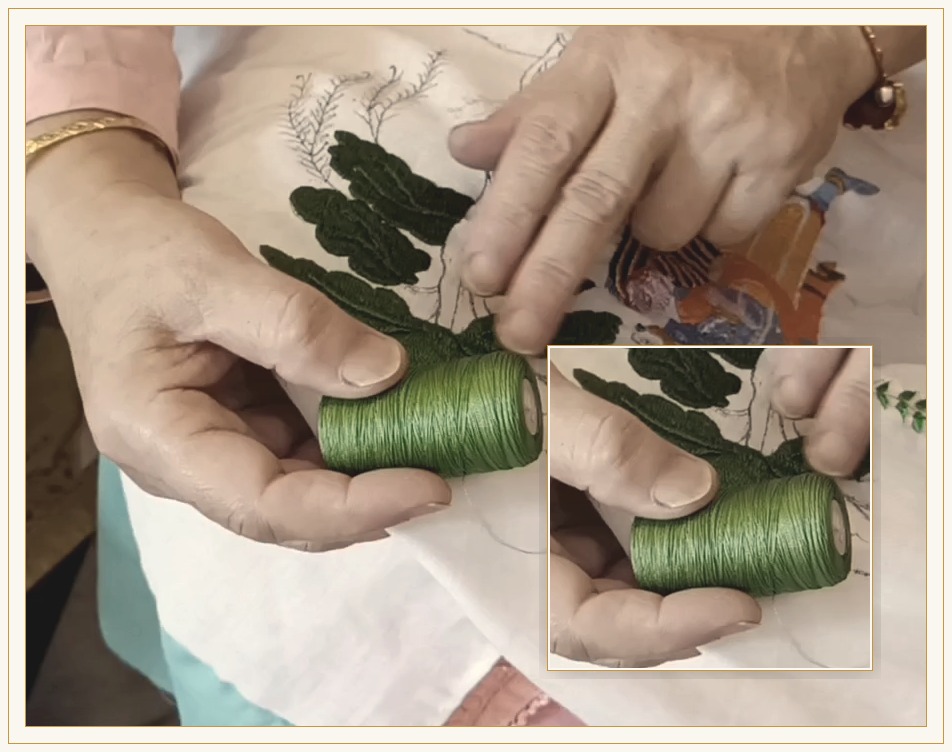
Dorukha is worked forward and back in one motion, so the same picture stands on either side of the cloth and the silk runs clean through with the knots held inside.
Three hundred and forty hours, one continuous pass. The maker holds the Padma Shri, and her name passes to the custodian at the viewing.
Request a private viewing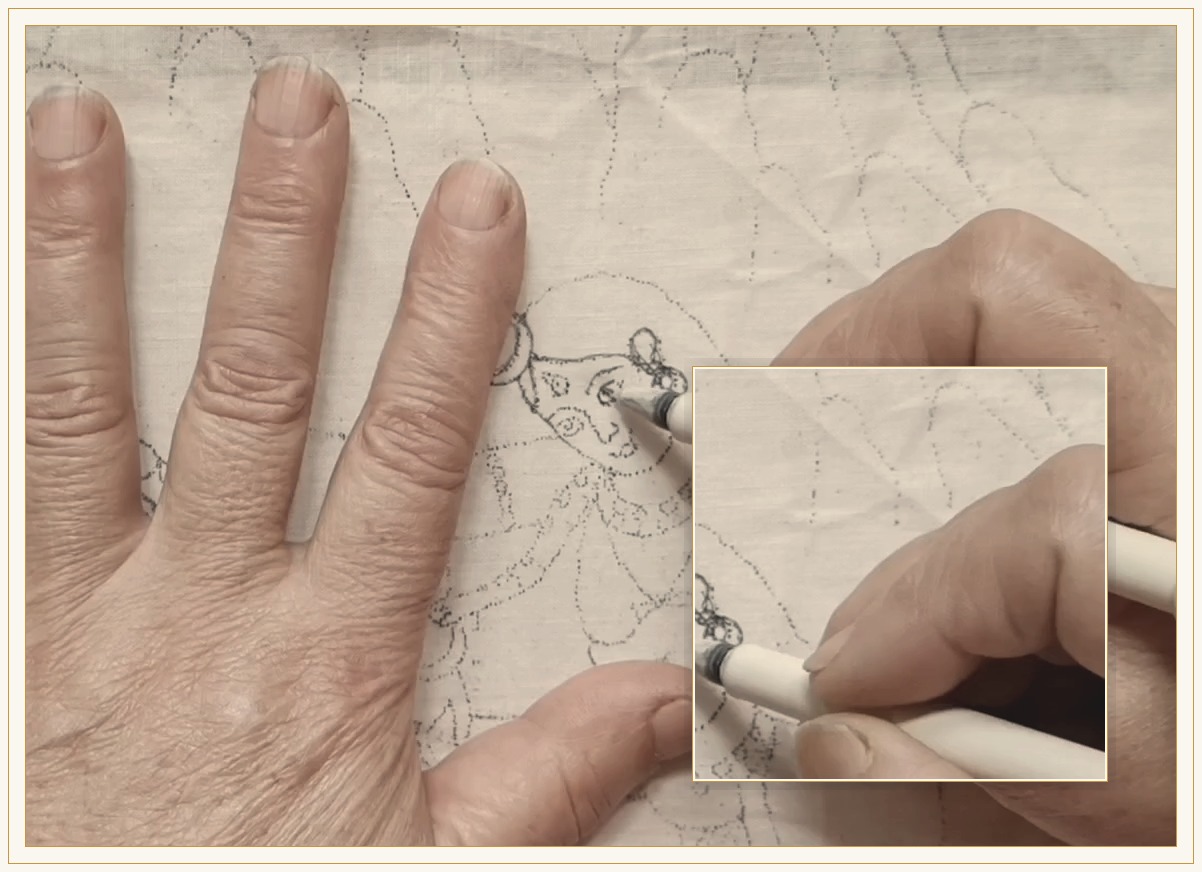
Rukmini Haran
The scene worked into the cloth: a letter sent west, a morning at the temple, and a promise kept.
In Vidarbha a princess is promised to a prince her heart refuses,
and so she writes in secret, seven verses folded small,
and sends them west with a Brahmin to the gates of Dwarka:
“Come to Ambika’s temple on the morning of my wedding.”
Take me before they give me away. I have chosen only You.
She walks to the shrine with her eyes lowered and her bangles hushed,
and all of her waits at the door like a lamp held steady against the wind.
And Krishna comes, the king of Dwarka, in robes of yellow silk,
a peacock feather shining in his crown, his golden chariot
drawn by four white horses, Daruka at the reins, the road
rising behind him in a cloud of dust and drumbeat.
Past the wedding guests, past the watching guards, he halts before the temple,
holds out his hand, and lifts her, light as a prayer answered,
to stand beside him. The garlands meant for another are left unworn,
and the wheels turn toward Dwarka, carrying a promise kept.
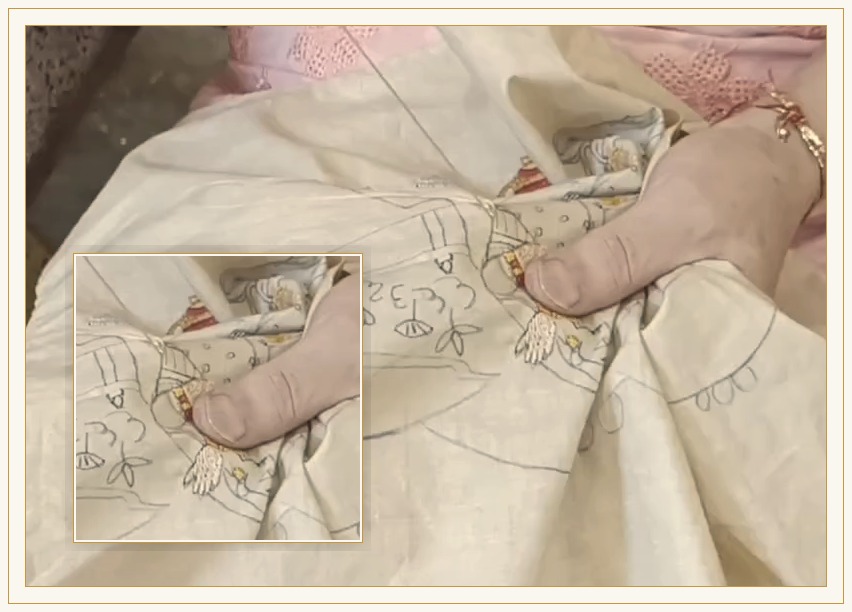
The images on this page record the craft as it is worked. Naksh itself is reserved for the viewing.
The record
- Material
- Untwisted pure silk thread on cotton
- Technique
- Dorukha, double satin stitch, identical on both faces
- Time invested
- 340 hours, a single continuous pass
- Subject
- Rukmini Haran
- Maker
- Padma Shri artisan, introduced at the viewing
- Origin
- The Himalayan foothills, Himachal Pradesh, India
- Edition
- 1 of 1. The pattern retires with the piece.
- Viewing
- By virtual private preview
- Delivery
- Insured, worldwide
A needle, a room of children, and fifty years.
She met this stitch at school, on a square of cloth passed around an art class. It was her father-in-law who saw what she could do with it. “You have talent,” he told her. “Bring the poor children from around here and teach them.” She brought them, and she is still bringing them fifty years later. Most of the women working this stitch in the hills today learned it from her, or from someone she taught.
She holds the Padma Shri, given for her work in bringing this embroidery back. There are other honours, and a name, and both pass to the custodian at the viewing. She has always let the work carry her name for her.
She talks about this as karma rather than as a career. She kept teaching, kept every obligation to her family and her town, and found the hours for the cloth as well. Once that balance held, she stayed with it.
Sixteenth century, and nearly lost
The earliest record
The earliest documented examples of this embroidery date to the sixteenth century, worked in the hill courts and carried as gifts between them.
The patronage ends
After Independence the courts that had kept it alive were gone. Without that patronage the work moved to the open market, and quality thinned as it was made faster and cheaper.
The return
What survives at this standard survives because a small number of hands refused to let the stitch go. Hers is the one the national honour recognises.
The stitch is its own evidence.
For a design to stand on both faces, with the silk running clean through the cloth, a trained hand has to work both sides at once and stay with it for months. That is the whole of the supply, and the whole of the value.
The tradition has held Geographical Indication protection since 2007. That protection recognises the craft and the region it comes from, which is where it belongs. This piece carries a record of its own: a numbered entry in our ledger, the maker’s signature, and her name, given to you and held between us.
Once the entry closes, the pattern retires. It will stand as the only one of its composition ever worked.
This season’s reserve
Three works. One released to private view, two still with their makers. Each is placed once.
-
Himachal Pradesh, India
Naksh
- Artisan
- Padma Shri, named at viewing
- Technique
- Dorukha silk embroidery
- Origin
- The Himalayan foothills
- Time invested
- 340 hours
Available for private viewingEnquire
-
Withheld
Withheld
- Artisan
- Withheld
- Technique
- Withheld
- Origin
- Withheld
- Time invested
- Withheld
In the hands of its maker
-
Withheld
Withheld
- Artisan
- Withheld
- Technique
- Withheld
- Origin
- Withheld
- Time invested
- Withheld
In the hands of its maker
Request a private viewing.
Every request is reviewed personally. Accepted requests receive a virtual private preview, by appointment. This is a request for a viewing, not a purchase, and there is no obligation to acquire.