Kala Reserve, from the maker’s collection: Basant, Punjab
Flower work, grown into a garden.
Phulkari is flower work on cloth. When it grows this dense and the silk covers the ground entirely, it is called a bagh, a garden. This one is named Basant, the Punjabi word for spring.
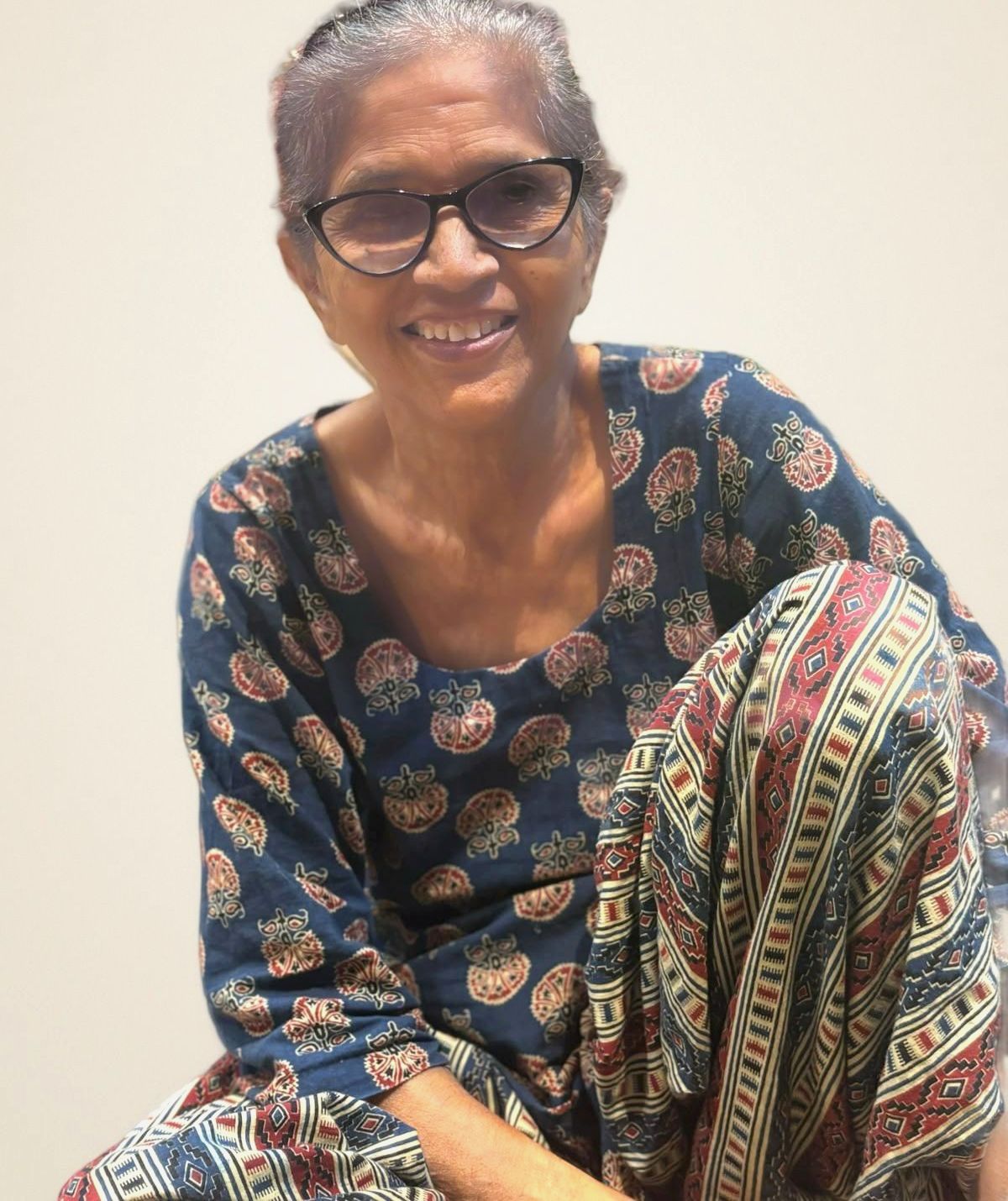
Twelve months at the needle. The maker, Dr. Lajwanti, holds the Padma Shri.
Request a private viewing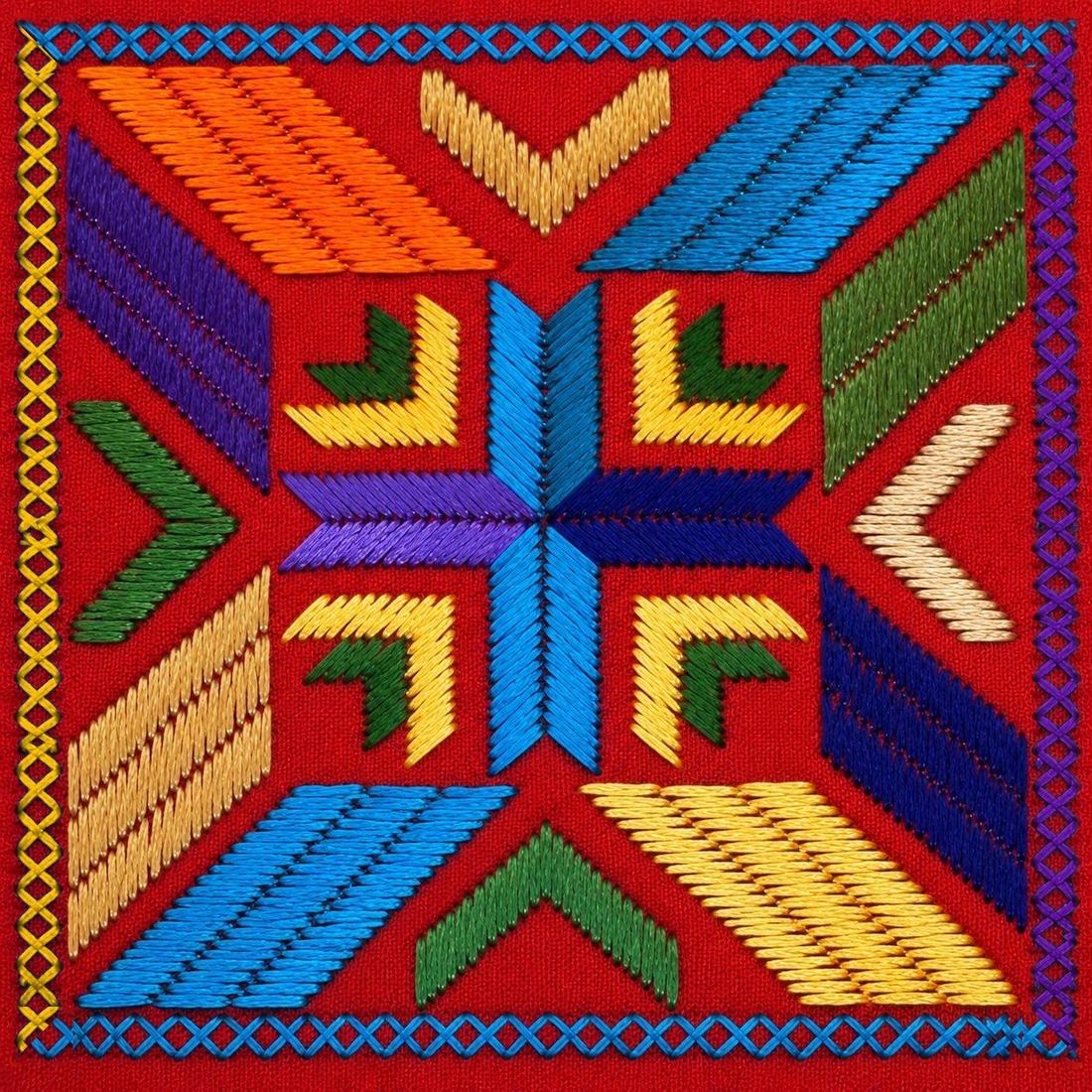
A red ground, and a garden of silk worked over it.
Basant is the Punjabi word for spring, the season when the fields come into flower. Phulkari is flower work. The name joins the two.
The ground is khaddar, the hand-woven cotton traditionally used for phulkari. Over the red cloth, stars, chevrons and diamonds are worked in silk, in blue, turquoise, violet, orange, yellow, green and cream.
It took Dr. Lajwanti twelve months to complete. She made it about eight years ago, and it comes from her own collection.
The images on this page are details. Basant itself is reserved for the viewing.
The record
- Material
- Silk thread on hand-woven khaddar cotton
- Technique
- Phulkari bagh, hand embroidery
- Time invested
- Twelve months
- Subject
- Basant, spring
- Maker
- Dr. Lajwanti, Padma Shri
- Origin
- Patiala, Punjab, India
- Made
- About eight years ago
- Edition
- From the maker’s own collection
- Viewing
- By virtual private preview
- Delivery
- Insured, worldwide
It has been part of her life since she was young.
Dr. Lajwanti began phulkari in childhood. It was already in the family, passed down through generations. Her maternal grandmother made pieces for the household and for the children, and the tradition continued from her.
Her grandmother came from Pakistan and brought the craft with her. Basant is worked in that tradition, and the piece itself is Dr. Lajwanti’s.
She holds the Padma Shri, given for her contribution to phulkari and for the importance of keeping this heritage alive.
One Punjab, then two, and the craft went with the people
Before Partition
Phulkari was practised across the Punjab region. Many families were involved in the craft, and its traditions were shared across communities.
After Partition
Families moved from one side to the other, carrying their skills, their memories and their traditions with them. The craft travelled with them.
Today
By Dr. Lajwanti’s account, only around a tenth of the phulkari worked in Patiala today is done by hand. The rest is machine-made. The hand work is the small part that remains.
The stitch is its own evidence.
Hand work and machine work can look alike at first glance. The difference is in the craftsmanship, and it can be read if you look closely.
Dr. Lajwanti’s advice to anyone unfamiliar with phulkari is to turn the cloth over and examine the threads on the back. The stitching, and the way the work has been done, will tell you whether a piece is made by hand or by machine. The back of a piece matters as much as the design on the front.
Basant carries a record of its own: a numbered entry in our ledger and the maker’s signature, with a certificate of provenance issued on acquisition.
This season’s reserve
Three works, each released to private view. Each is placed once.
-
Himachal Pradesh, India
Naksh
- Artisan
- Padma Shri, named at viewing
- Technique
- Dorukha silk embroidery
- Origin
- The Himalayan foothills
- Time invested
- 340 hours
Available for private viewingDetails
-
Punjab, India
Basant
- Artisan
- Dr. Lajwanti, Padma Shri
- Technique
- Phulkari bagh
- Origin
- Patiala, Punjab
- Time invested
- Twelve months
Available for private viewingEnquire
-
Gujarat, India
Maadi
- Artisan
- Bhanubhai Chitara, Padma Shri
- Technique
- Mata ni Pachedi
- Origin
- Ahmedabad, Gujarat
- Time invested
- 600 hours
Available for private viewingDetails
Request a private viewing.
Every request is reviewed personally. Accepted requests receive a virtual private preview, by appointment. This is a request for a viewing, not a purchase, and there is no obligation to acquire.