Kala Reserve: Maadi, Gujarat
Where the temple doors were closed, the cloth became the temple.
Mata ni Pachedi means the cloth behind the Goddess. It is a shrine painted on cotton, made by people who were not allowed into the temple, and raised wherever they gathered to pray.
Six hundred hours, every line drawn freehand. The maker, Bhanubhai Chitara, holds the Padma Shri.
Request a private viewing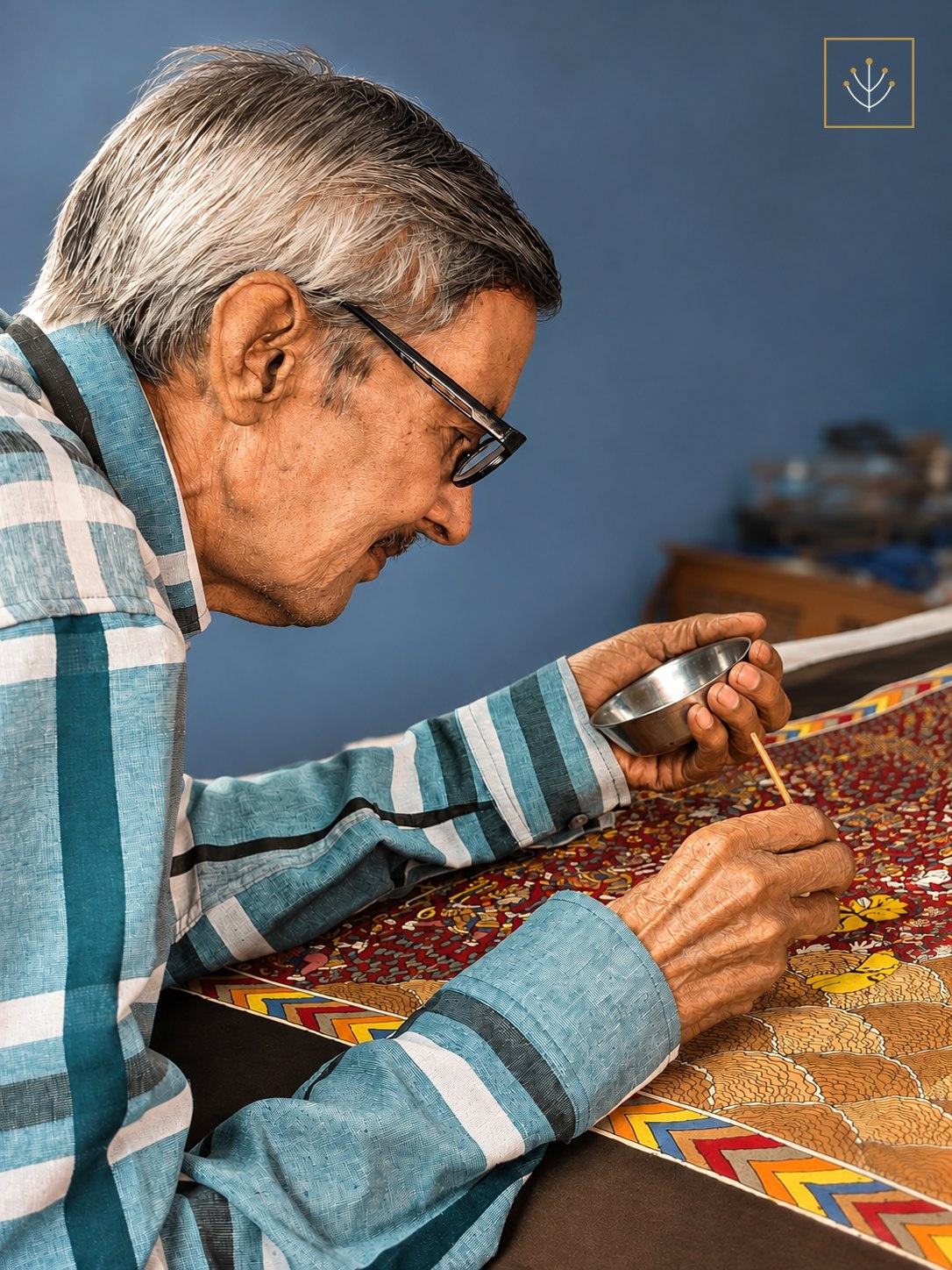
Maadi, the Divine
The story drawn into the cloth: a door that stayed shut, a goddess carried home, and a river that kept the colour.
In the villages of Gujarat, the temple doors were shut to the wandering Devipujak, by birth and by the rule of caste. They did not knock. They took a length of plain cotton and drew the Divine onto it, so that if they could not go to her, she could come with them.
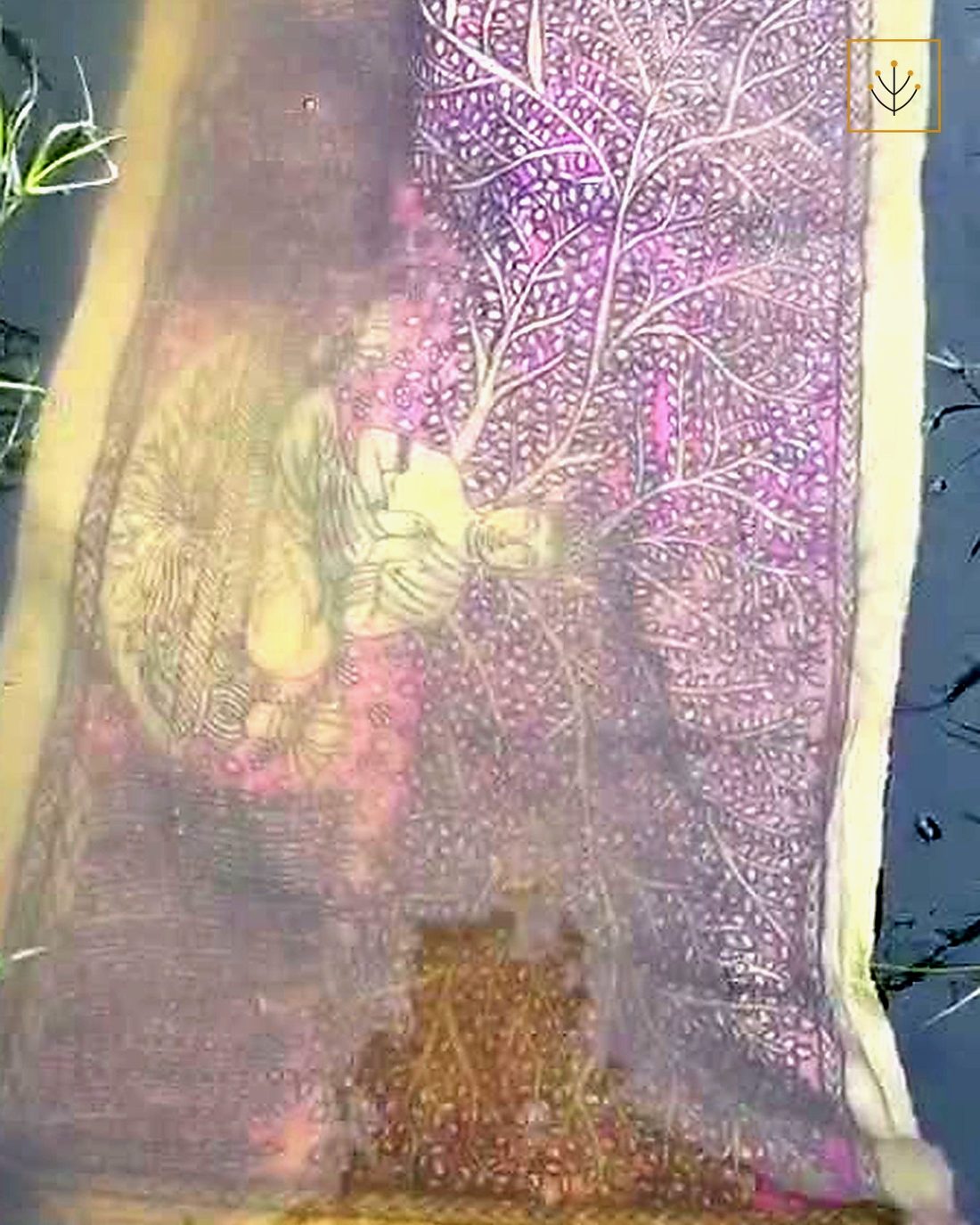
She sits at the centre of the cloth, crowned and riding, her arms held open. The panels around her fill with all who come to her: the drummers, the lamps, the vows kept at Navratri.
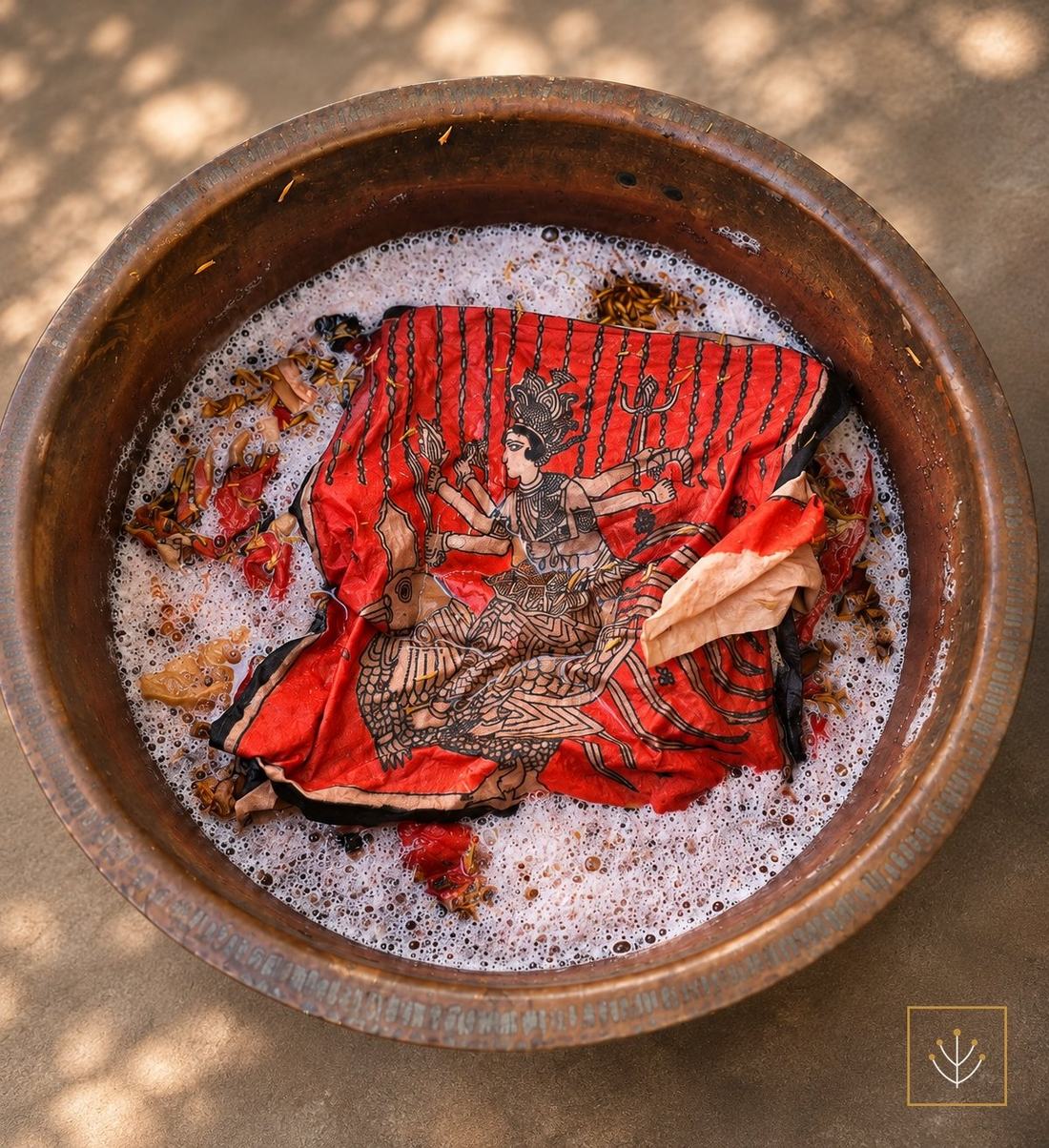
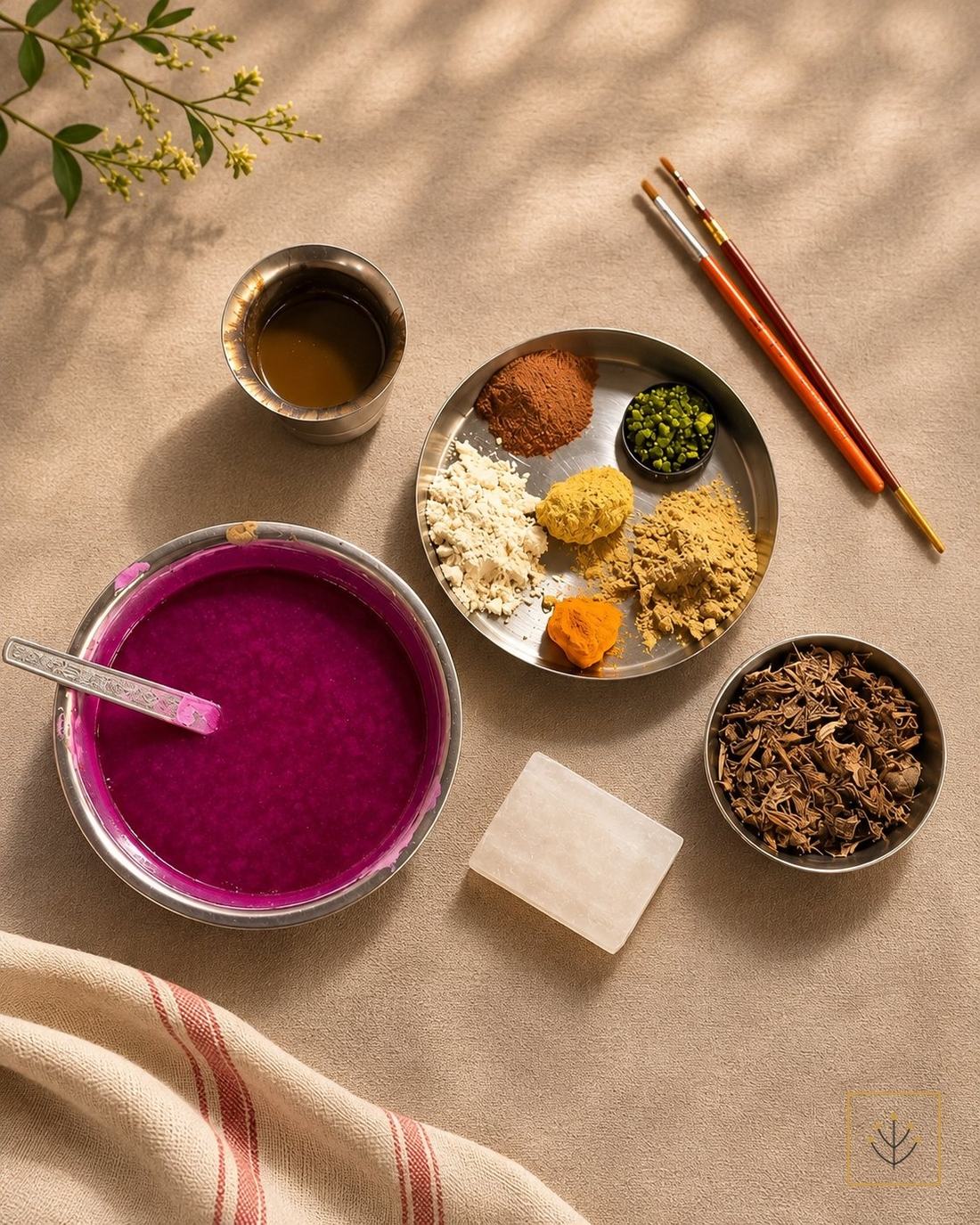
Every line was drawn with a pen cut from bamboo. Black came from iron and jaggery, red from alum and the madder root, and the white was left bare. Between each stage the cloth was carried to the Sabarmati, washed in the moving water and dried on its banks. Six hundred hours passed between the first line and the last, and what came home was a shrine no door could keep out.
The images on this page are details. Maadi itself is reserved for the viewing.
The record
- Material
- Natural dyes on cotton: black from iron and jaggery, red from alum and alizarin, pink from Indian madder, yellow from tamarind, brown from catechu
- Technique
- Mata ni Pachedi, drawn freehand with a bamboo kalam and dyed by hand
- Time invested
- 600 hours
- Subject
- Maadi, the Divine
- Maker
- Bhanubhai Chitara, Padma Shri
- Origin
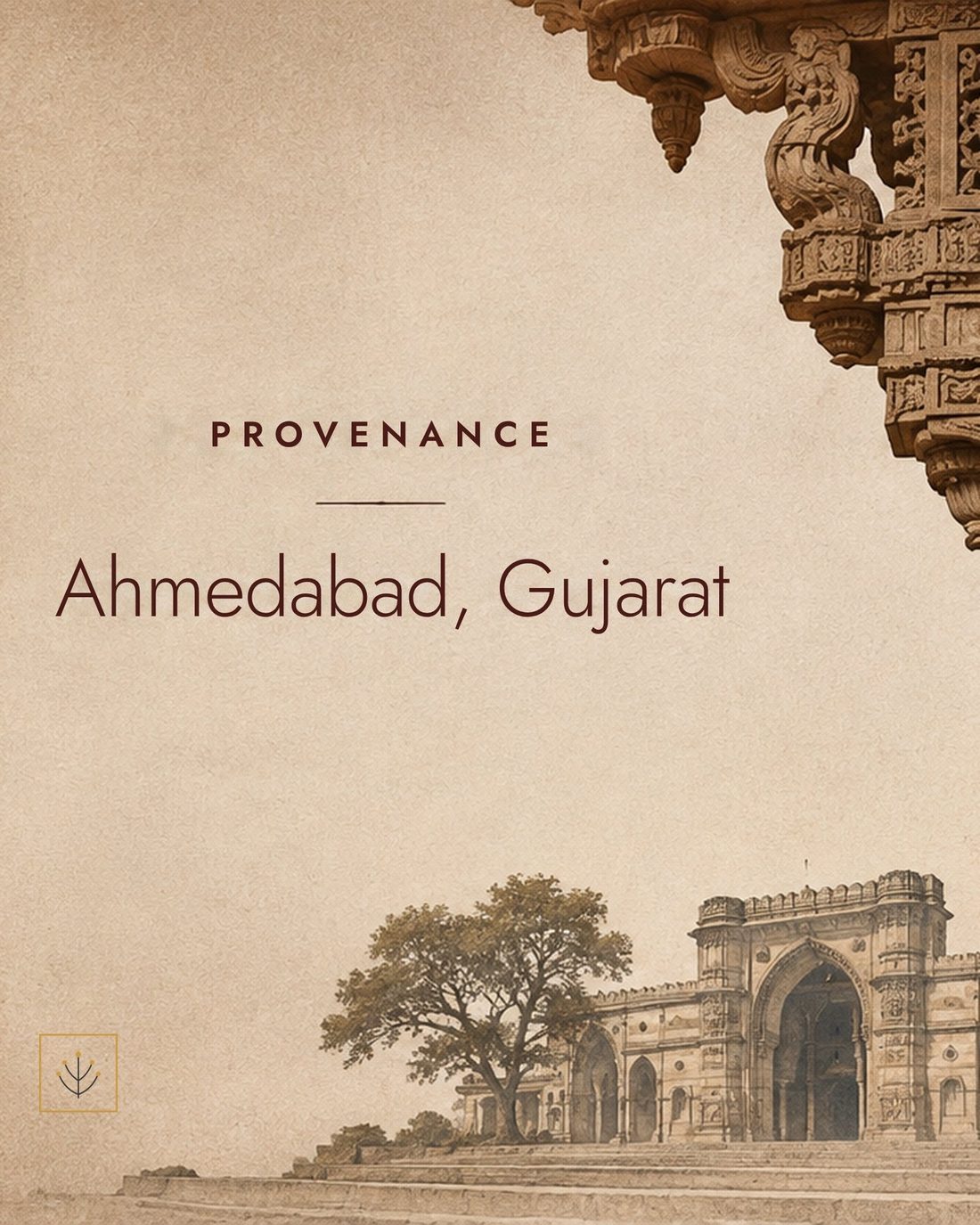
- Ahmedabad, Gujarat, India
- Edition
- 1 of 1. The composition retires with the piece.
- Viewing
- By virtual private preview
- Delivery
- Insured, worldwide
Nine generations of one family, and more than fifty years at the cloth.
Bhanubhai Chitara was fifteen when he began painting Mata ni Pachedi. He is seventy-one now. The craft came to him the way it came to every Chitara before him, at home and from the generation above. He is the seventh in his family to carry it, and two generations after him now work at the cloth beside him.
For more than half a century he has kept to the old method: the bamboo kalam, the dyes prepared by hand, the river between each stage. Maadi is worked in that method.
He holds the Padma Shri, awarded in 2023 for his work in Mata ni Pachedi.
A shrine that could be carried, kept alive in Ahmedabad
The shrine on cloth
The Devipujak community of Gujarat moved from place to place and were barred by caste from entering the temples. So they painted the goddess onto cloth and raised shrines of their own, with panels standing around her, wherever they settled. The tradition is held to be at least three to four hundred years old.
The cloth in worship
The pachedi was hung at Navratri, offered when a vow to the goddess was fulfilled, and given back to the river once it was worn. Today it is most often seen as the backdrop to small temples and household shrines.
Ahmedabad, today
The craft now rests with a single extended family and community in Ahmedabad, on the banks of the Sabarmati, the river its cloths have always been washed in. Much of what is sold under its name is printed, with synthetic colour. The freehand, natural-dye work is the small part that remains.
The line is its own evidence.
A printed pachedi and a drawn one can look alike from across a room. Up close, a line drawn with the kalam thickens where the pen was reloaded and moves the way a hand moves. Dye that has been fixed and washed in the river sits in the cotton, not on top of it.
Mata ni Pachedi has held Geographical Indication protection since 2023. That protection recognises the craft and the place it comes from, which is where it belongs. This piece carries a record of its own: a numbered entry in our ledger and the maker’s signature, with a certificate of provenance issued on acquisition.
Once the entry closes, the composition retires. It will stand as the only one of its kind ever drawn.
This season’s reserve
Three works, each released to private view. Each is placed once.
-
Himachal Pradesh, India
Naksh
- Artisan
- Padma Shri, named at viewing
- Technique
- Dorukha silk embroidery
- Origin
- The Himalayan foothills
- Time invested
- 340 hours
Available for private viewingDetails
-
Punjab, India
Basant
- Artisan
- Dr. Lajwanti, Padma Shri
- Technique
- Phulkari bagh
- Origin
- Patiala, Punjab
- Time invested
- Twelve months
Available for private viewingDetails
-
Gujarat, India
Maadi
- Artisan
- Bhanubhai Chitara, Padma Shri
- Technique
- Mata ni Pachedi
- Origin
- Ahmedabad, Gujarat
- Time invested
- 600 hours
Available for private viewingEnquire
Request a private viewing.
Every request is reviewed personally. Accepted requests receive a virtual private preview, by appointment. This is a request for a viewing, not a purchase, and there is no obligation to acquire.